The University at a Crossroads: Navigating Change in Higher Education
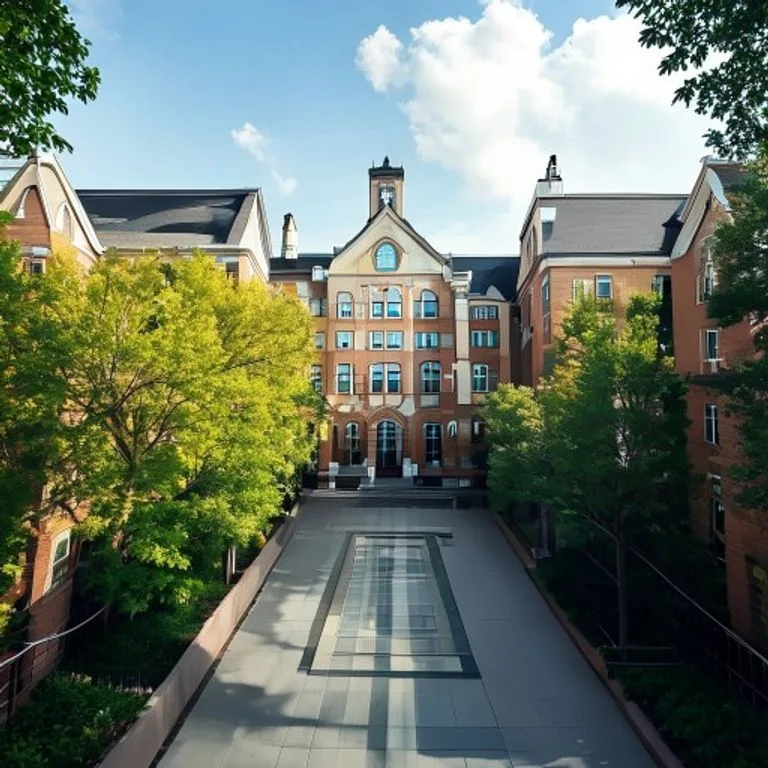
For centuries, the university has stood as a beacon of knowledge, a crucible for critical thought, and a gateway to social mobility. From the medieval lecture halls of Bologna and Oxford to the sprawling research powerhouses of today, these institutions have adapted to wars, revolutions, and technological upheavals. Yet, as the 2020s give way to a new era, universities face a confluence of pressures unlike any before—from the affordability crisis and the rise of artificial intelligence to shifting public trust and the very definition of what a degree is worth.
Enrollment figures tell a stark story in many developed nations. In the United States, undergraduate enrollment saw significant dips during the pandemic, and while numbers have begun to stabilize, they remain below pre-2020 levels. Demographics are shifting; fewer traditional college-aged students exist in parts of Europe and East Asia, forcing institutions to compete more aggressively for a shrinking pool. Meanwhile, in regions like sub-Saharan Africa and South Asia, demand for higher education continues to explode, straining infrastructure and resources as governments scramble to build capacity.
The Affordability Paradox and the Value Proposition
The escalating cost of tuition remains the defining crisis for higher education in many countries. Student debt in the U.S. has surpassed $1.7 trillion, a figure that shapes life decisions for generations—delaying homeownership, marriage, and even career choices. The narrative that a bachelor's degree is a guaranteed ticket to the middle class is under scrutiny. While data still shows that graduates earn significantly more over a lifetime than non-graduates, the variance by field of study is vast. A degree in engineering or computer science offers a vastly different return on investment than one in the humanities, leading to a societal debate about the purpose of education: is it primarily for economic output, or for producing well-rounded citizens?
In response, a growing alternative market has emerged. Coding bootcamps, industry micro-credentials, and online certificate programs from major tech companies offer faster, cheaper pathways into specific careers. "The monopoly of the university on credentialing is broken," notes Dr. Elena Rossi, a higher education policy analyst at the London School of Economics. "Universities must now prove their worth not just through prestige, but through demonstrated outcomes, career support, and adaptability."
Technology is simultaneously a threat and a lifeline. Artificial intelligence tools like large language models have disrupted traditional assessment overnight. Essays, once the gold standard of evaluation, can now be generated instantly. This has forced faculty to rethink pedagogy, moving toward oral exams, project-based learning, and invigilated assessments. On the administrative side, AI offers the promise of personalized tutoring systems and data-driven retention strategies, but it also raises the specter of job displacement for support staff.
The campus experience itself is being reimagined. The pandemic proved that lectures can be recorded and degrees can be earned remotely, challenging the justification for high residential tuition fees. Yet, the pendulum is swinging back; students and employers are placing renewed value on in-person collaboration, networking, and the "soft skills" developed through campus life. The most successful institutions are likely to be hybrid models that blend the flexibility of online learning with the irreplaceable social capital of physical campuses. "Universities are not just in the knowledge business," argues Professor James Whitfield of the University of Melbourne. "They are in the people business. The dormitory, the dining hall, and the debate club are not relics—they are features."
As universities around the globe grapple with these forces, one reality is clear: the sector is undergoing a fundamental restructuring. Some institutions will thrive, leveraging endowments and brand power to innovate. Others, particularly mid-tier regional universities, face existential threats from declining enrollment and budget shortfalls. The winners will be those that can balance tradition with transformation—preserving the core mission of critical inquiry while embracing the tools and truths of the 21st century. The university is not dying; it is being remade.